3D Animation
Last of Us — Intro Recreation
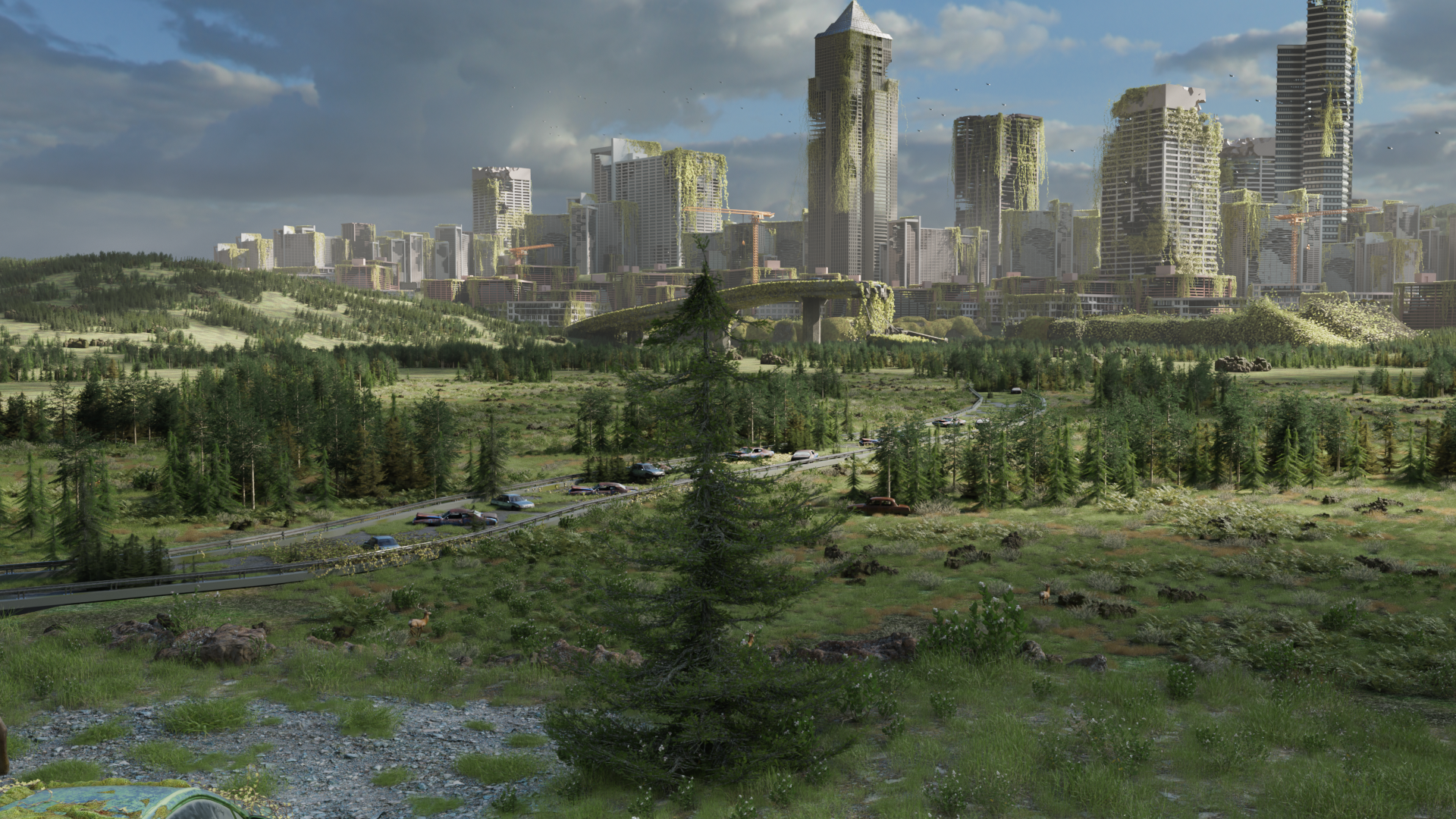
An Intro Recreation inspired by the visual language of the Last of Us intro — not a recreation, but an independent idea. Every organic growth and particle effect was simulated from scratch in Houdini, while the ruined city buildings were modelled by hand in Cinema 4D, then everything was composited into a final cinematic cut.
Table of Contents
Final Result
The Final Animation
Pre-Production
Moodboard, Storyboard & Styleframes
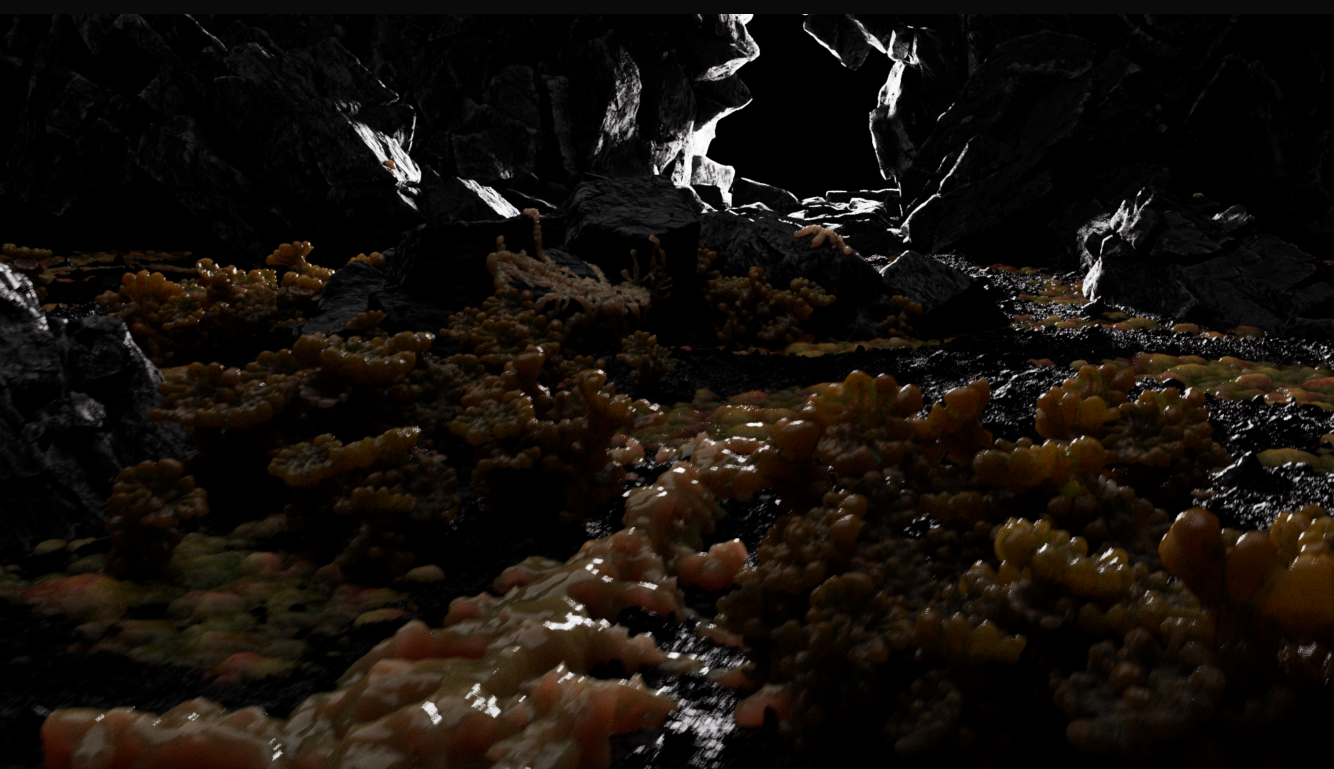
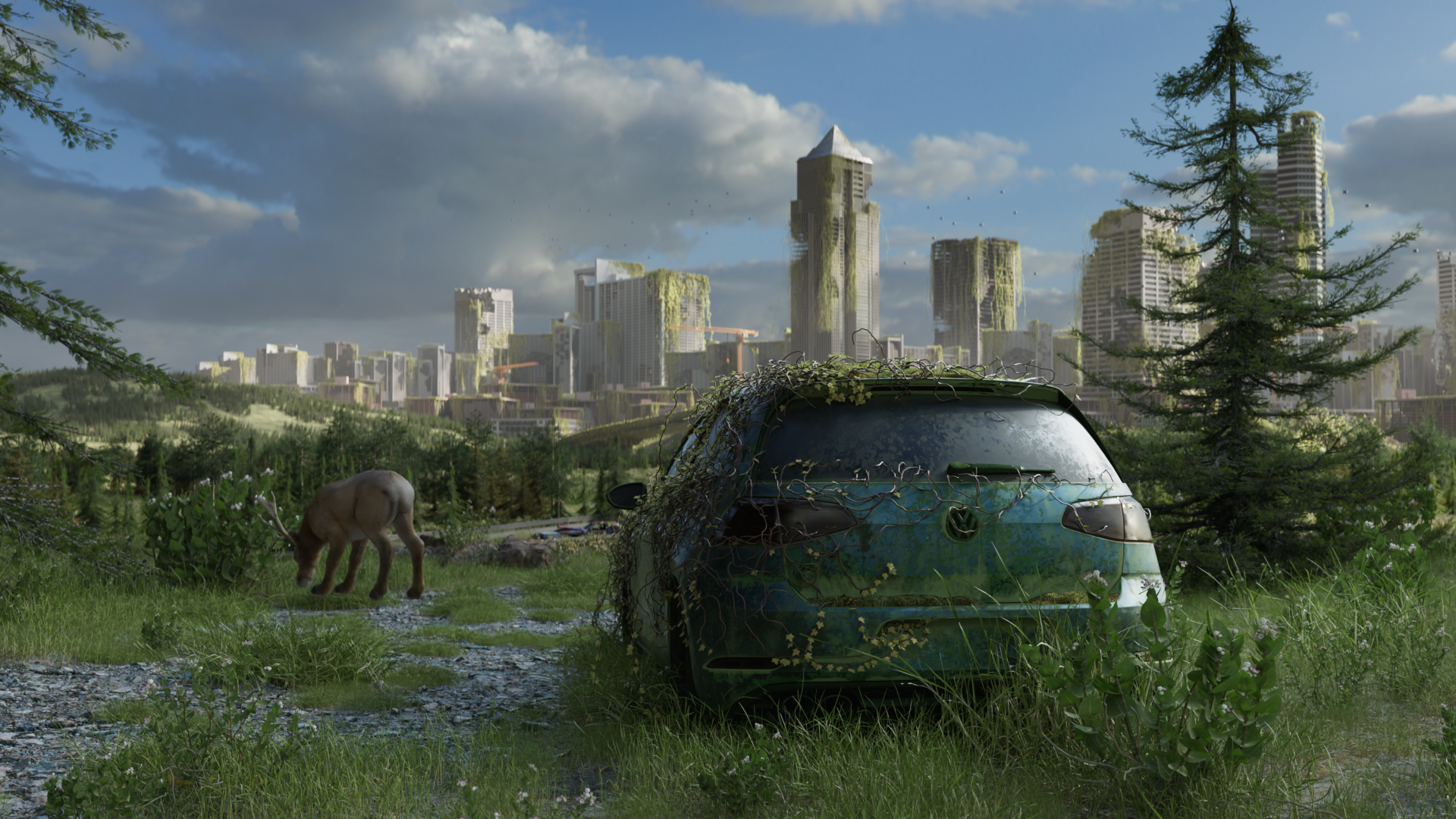
Before any simulation started, the visual direction was established with a moodboard, followed by a full storyboard and a set of styleframes to define the lighting mood, colour palette and camera progression of the entire sequence.
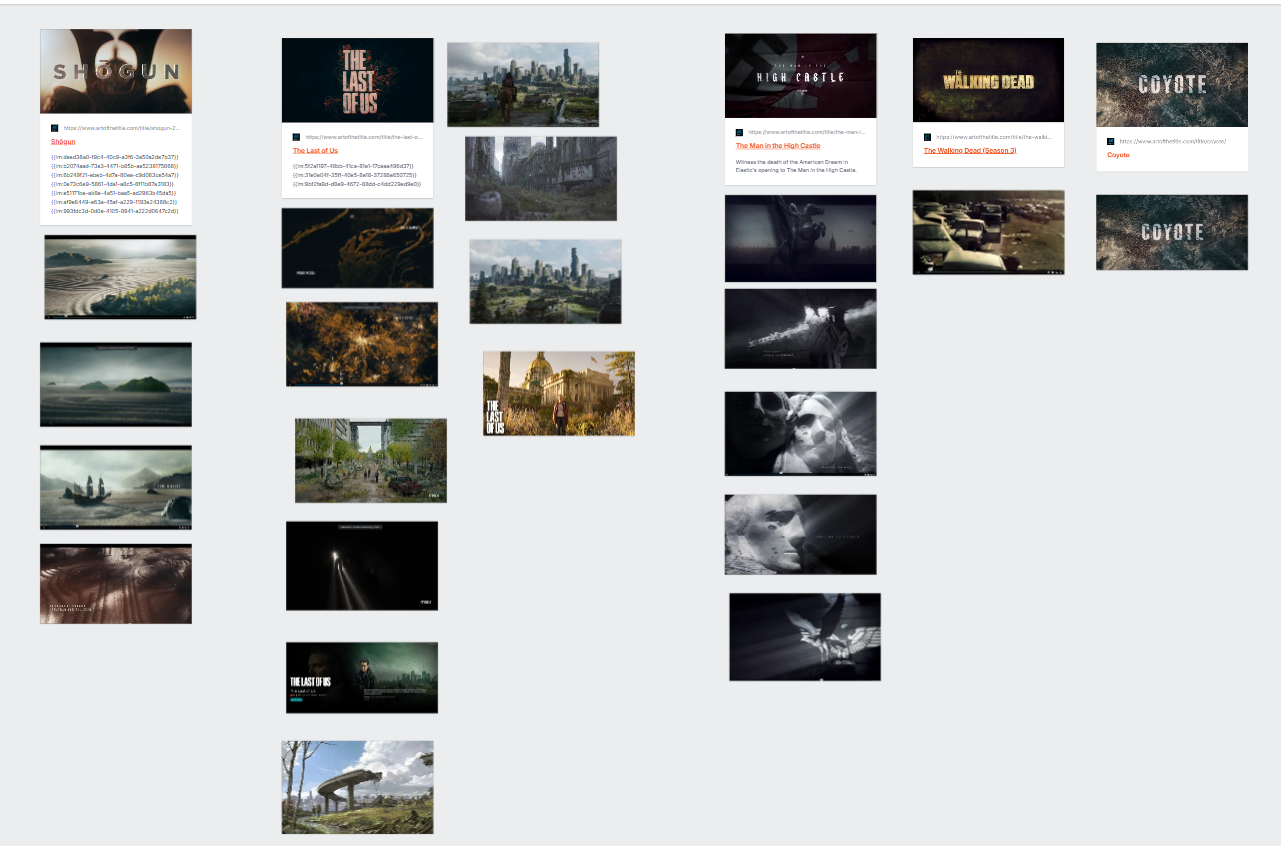
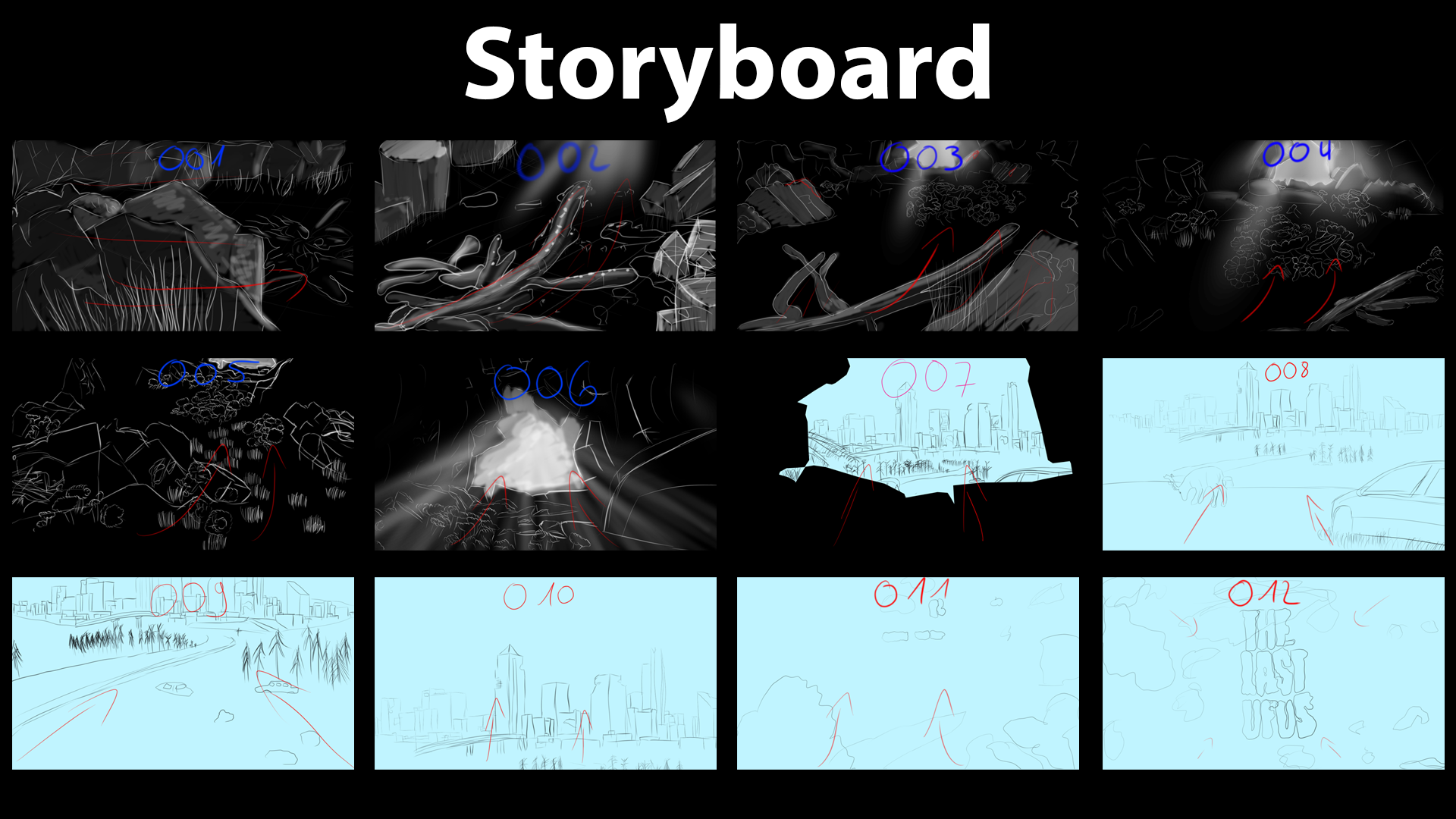
Behind the Scenes
Houdini Simulations
Each effect in the intro was simulated individually in Houdini before being composited together. Below you can see every sim in isolation from the organic fungal growth to the atmospheric cloud and particle effects.
3D Modelling · Cinema 4D
Destroyed High-Rise Buildings
The ruined cityscape in the background was built by hand in Cinema 4D — crumbling high-rise facades with broken floors, shattered windows and overgrown concrete. Drag the slider to compare the viewport wireframe against the final render.
3D Modelling · Nature Elements
Nature & Organic Elements
All nature assets in the scene were modelled by hand in Cinema 4D — including overgrown trees, weathered stones and crumbling bridges reclaimed by nature. Drag the slider to compare the Cinema 4D viewport against the final render.
Texturing · Cinema 4D
Materials & Texturing
Side-by-side comparison of the final 3D materials and the reference material creation process — both videos are synced.
3D Scene Setup · Cinema 4D
Scene Setup
The complete scene assembly in Cinema 4D — from the initial placement of all 3D assets through to the final camera setup, lighting and environment composition.
Post-Production
Sound Design
All audio was sourced from Artlist.io and composed into a custom sound design mix — combining atmospheric ambiences, organic creature foley, bird calls and a cinematic music track to match the tone of the sequence.
Music
Sound Effects
Post-Production · Compositing
Compositing — Passes & Layers
An overview of the individual render passes and composite layers used to build the final image — from diffuse and specular to depth, ambient occlusion and all effects passes combined step by step.
First Version
First Version — What Changed & Why
After completing the first render, a few things didn't feel right and I decided to revise them before finalising the project.
Final Result
The Final Animation
Credits — External 3D Assets
Third-party models used in this project. All assets are credited to their respective creators.
Sketchfab
Megascans / Fab
Own Assets — Free Download
These models and materials were created by me and are available for free on Lazytextures.com.
Rocks
Trees
Materials
Project Details